Supreme Court Review Could Recast Presidential Removal Powers Nationwide
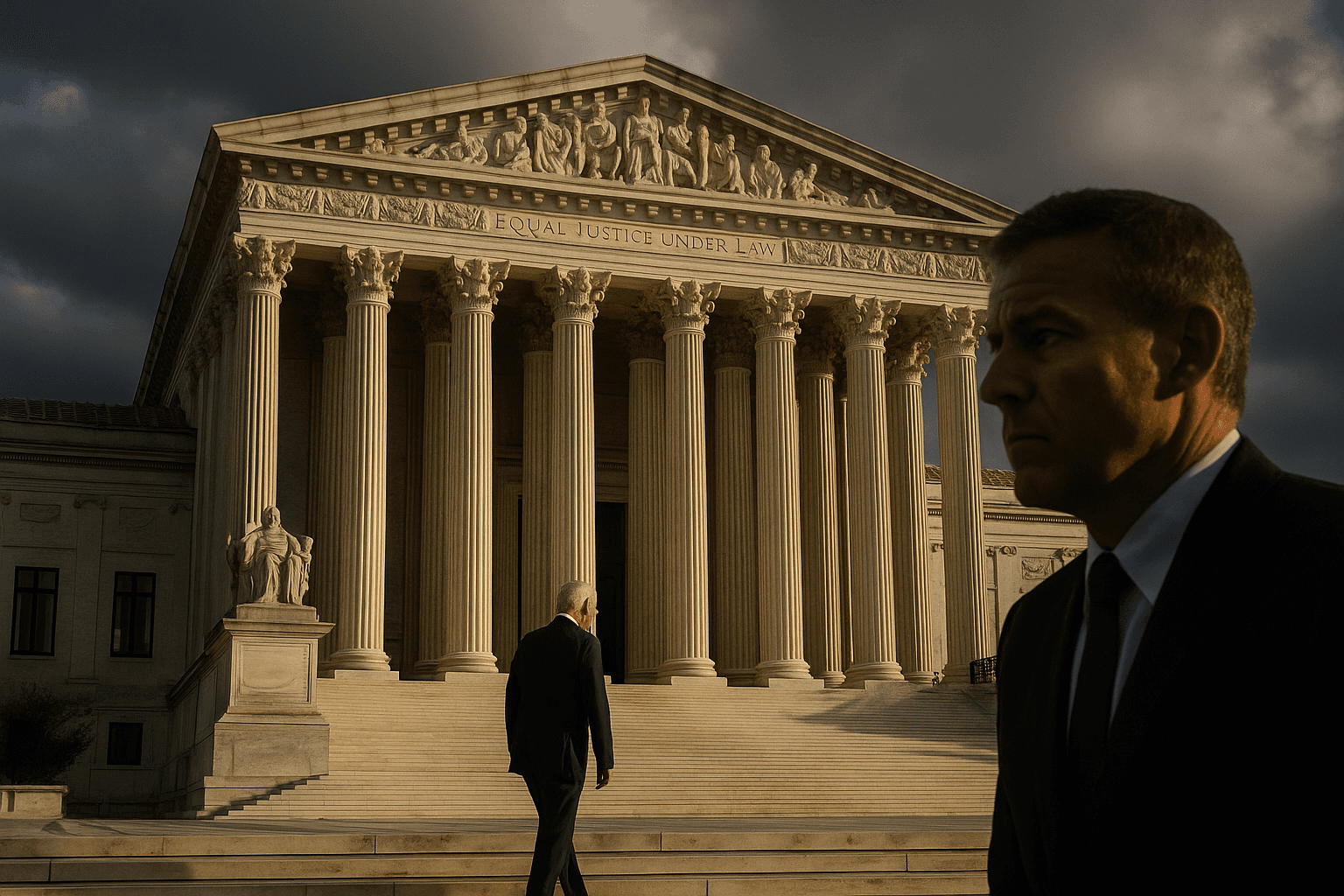
The Supreme Court heard arguments on December 7 over a challenge to the nearly century old Humphrey’s Executor precedent that shields heads of independent agencies from removal at will. A broad ruling in favor of expanded presidential removal authority would reshape the balance between the executive branch and regulatory bodies, with concrete consequences for labor, antitrust, financial and public health enforcement.

On December 7 the Supreme Court confronted a case that could overturn or substantially narrow the nearly century old Humphrey’s Executor line of cases, which has for decades insulated leaders of independent agencies from removal at will by the President. The argument represents the latest in a growing wave of litigation mounting in federal district courts and state courts that tests the structural limits of agency independence and the scope of presidential control over the administrative state.
Legal analysts say the stakes are institutional and practical. If the Court expands presidential removal authority, presidents would gain leverage to force departures of agency officials whose policies do not align with the White House. That authority could accelerate shifts in enforcement priorities at agencies that oversee labor markets, competition policy, financial markets and public health. The prospect has already altered Department of Justice and regulatory planning and would prompt rapid changes in staffing and rulemaking priorities if sustained.
The litigation follows earlier Supreme Court decisions that began to chip away at layers of agency protection. In 2020 the Court in Seila Law curtailed statutory insulation for at least one single director financial agency, signaling judicial willingness to reassess separation of powers principles in administrative law. The current case directly targets the broader Humphrey’s Executor doctrine that has underpinned multi member commissions and other insulated bodies since 1935.
A major ruling in favor of broader presidential removal could incentivize presidents to rely more on personnel changes to achieve policy goals rather than on formal rulemaking or legislation. That could quicken policy swings between administrations and increase the political salience of agency appointments. Conversely a decision preserving Humphrey’s Executor would reaffirm a century of functional protections designed to preserve agency expertise and independence in enforcement decisions.
Congressional policy makers are likely to respond regardless of the outcome. Legislators could redesign statutes to protect certain officials by structuring multi member commissions, embedding for cause removal protections in law, or altering appointment and funding mechanisms. The legal uncertainty is already pushing agencies to consider contingency plans for sustained litigation and potential reorganization.
For the public the implications are direct. Enforcement priorities affect workplace protections, consumer financial rules, antitrust actions affecting prices and industry consolidation, and the nation’s ability to respond to public health threats. Changes in removal rules would therefore have downstream effects on businesses, workers, investors and communities that rely on consistent regulatory enforcement.
The decision to come from the Supreme Court is likely to be closely watched and prompt further litigation in state courts and lower federal courts as parties test the contours of any new doctrine. Until the Court issues its ruling, agencies must navigate a heightened period of legal and political uncertainty that could influence enforcement, rulemaking and the broader relationship between the presidency and independent regulatory institutions.