Tesla shifts Full Self-Driving to subscription only after Feb. 14
Tesla will stop selling FSD as a one-time purchase and require monthly subscriptions after Feb. 14, raising questions about revenue, ownership and safety oversight.

Elon Musk announced on X that Tesla will stop selling its Full Self-Driving software as a one-time, lifetime purchase and will offer the package only through a monthly subscription after Feb. 14. Musk posted: "Tesla will stop selling FSD after Feb 14. FSD will only be available as a monthly subscription thereafter."
The change ends the option in the United States to buy FSD outright for a single payment. Until now buyers could choose a one-time price of $8,000 or subscribe starting at $99 per month; the upfront price has fluctuated over the years, peaking at $15,000 in 2022 while a subscription option first appeared in 2021 at $199 per month before being cut to $99 in 2024. Tesla currently offers FSD on Model 3, Model Y and Cybertruck, and has bundled it into premium packages on Model S and Model X.
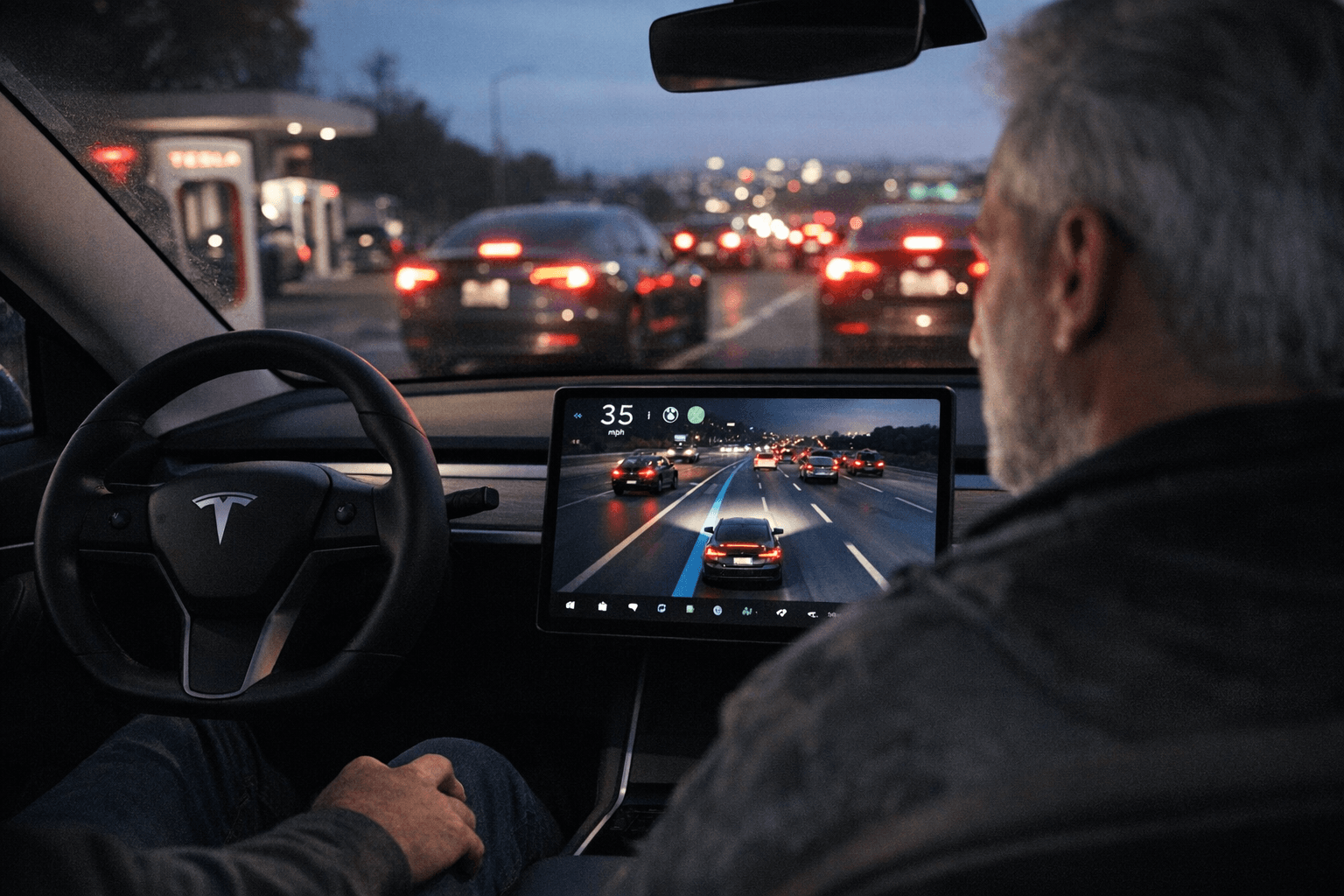
Functionally, Full Self-Driving is an advanced driver assistance suite that requires human supervision. The system, often labeled Full Self-Driving (Supervised), extends Autopilot by adding automated lane changes, the ability to respond to traffic signals on city streets and convenience features such as Autopark and Smart Summon. Tesla has also deployed an unsupervised variant in limited internal contexts, including moving cars from assembly lines to delivery lots at some factories, while public-facing versions continue to require drivers to stay alert and ready to intervene.
Regulators have been watching those features closely. The National Highway Traffic Safety Administration opened an investigation in 2025 into roughly 2.88 million Tesla vehicles equipped with FSD after receiving more than 50 reports of traffic-safety violations and a series of crashes. The agency’s probe remains an unsettled backdrop as Tesla alters how it packages access to the software.
The subscription-only model has potential business and legal implications. Converting lifetime purchases to recurring revenue can smooth earnings and increase the lifetime value of customers, but it also raises questions about how Tesla will treat owners who purchased FSD outright. It is unclear whether existing one-time buyers will retain perpetual access, shift to a subscription for continued updates, or receive other compensation. Tesla did not immediately respond to requests for comment on those points.
Investors reacted to the announcement with a modest market move, with Tesla shares trading down more than 2% on the day Musk posted the change. Industry observers note the shift could broaden access for drivers unwilling or unable to pay a large upfront fee, while also complicating revenue recognition, subscription billing and the company’s legal exposure related to product performance.
The change also comes amid Tesla’s broader autonomy ambitions. The company has piloted limited robotaxi and ride-hailing services in cities including Austin and San Francisco, though those services have operated with drivers behind the wheel in many cases. Industry data show competitors, notably Waymo, operate at larger scale in paid driverless rides, underscoring the differing commercial trajectories in autonomous mobility.
For customers and regulators, the immediate questions are practical: how subscriptions will be priced across regions and models, how existing owners will be treated, and whether the change will alter the company’s obligations under safety investigations. Tesla’s decision to move to subscription-only access marks a notable shift in how automakers monetize driver assistance, but it leaves core policy and safety questions unresolved.
Know something we missed? Have a correction or additional information?
Submit a Tip