Trump Signals Possible Withdrawal of U.S. Support for Ukraine, Calls Europe Weak
President Donald Trump suggested in public remarks and a Politico interview that the United States could pull back support for Ukraine, arguing that Russia holds the "upper hand" and urging Ukrainian leaders to rethink territorial resistance. His comments, paired with sharp criticism of Europe as "weak" and "decaying" tied to immigration and cultural concerns, raise immediate questions about U.S. strategy, alliance cohesion, and the domestic political calculus.

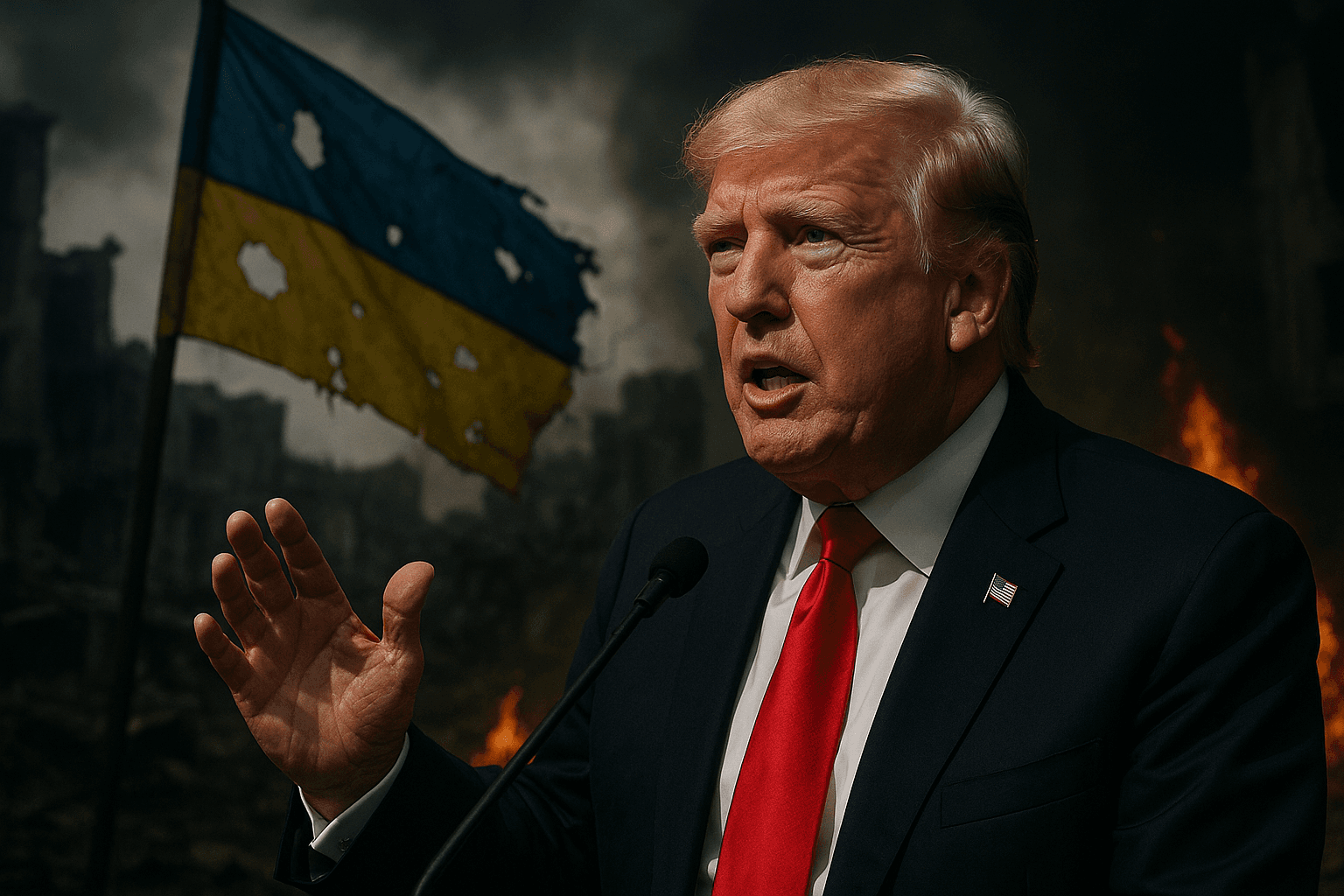
President Donald Trump told audiences and a Politico interviewer on Wednesday that the United States might withdraw its backing for Ukraine, asserting that Russian forces have the "upper hand" and suggesting Ukrainian leaders weigh ceding territory. The remarks represent the most explicit indication to date from a sitting president that Washington could reduce or end support for Kyiv, at a moment when military assistance and political commitment have been pillars of U.S. strategy since Russia invaded in 2022.
The comments were accompanied by a broad rebuke of European governments, which Mr. Trump characterized as "weak" and "decaying," and tied those assessments to immigration and cultural shifts. By conflating transatlantic security cooperation with domestic culture disputes, the president signaled a potential reorientation of U.S. foreign policy that specialists warn could strain NATO unity and accelerate geopolitical shifts on the battlefield.
Policy analysts said the immediate implications are destabilizing. U.S. security aid and materiel have been central to Ukraine maintaining front line defenses and conducting counteroffensives. A credible U.S. threat to withdraw support could sap Ukrainian morale and embolden Russian military and diplomatic leverage. It also places pressure on European capitals to fill gaps in assistance at a time when many have already stretched defense budgets and domestic politics that complicate further increases.
Constitutionally and politically, any pullback would intersect with Congress, which retains power over appropriations. Lawmakers from both parties have provided funding for Ukraine intermittently, while also pressing administration figures on strategy and oversight. A unilateral shift by the president could prompt expedited hearings, legislation to constrain executive action, or targeted amendments tying aid to conditions. The prospect of friction between the White House and Congress increases the risk of policy whiplash that allies will watch closely.
Domestically, the remarks play into broader electoral dynamics. Mr. Trump’s critique of Europe resonates with parts of his political base that prioritize immigration restriction and cultural conservatism. At the same time, a turn away from Ukraine could alienate moderate voters and members of his party who see transatlantic alliances as essential to U.S. security and economic interests. Advocacy groups and veterans organizations that have mobilized support for Ukraine warned that abrupt policy reversals would undermine trust in U.S. commitments.
The president’s statements came on a crowded news day that included other developments with political weight. Reporting by ProPublica examining Mr. Trump’s past mortgage and residence claims raised fresh questions about transparency and past representations. A federal order permitting the release of some sealed materials related to Ghislaine Maxwell and Jeffrey Epstein introduced new public scrutiny into long dormant records. Separately, allegations of mistreatment at a Texas immigration facility added to scrutiny of border enforcement practices that the president has tied to his criticisms of Europe.
Taken together, the episodes underscore how foreign policy signals, domestic controversies, and legal developments can converge to reshape public debate and institutional responses. Congressional leaders, NATO officials, and Ukrainian authorities will be watching in the coming days for clarifying actions or formal directives that would convert rhetoric into revised policy.
Sources:
Know something we missed? Have a correction or additional information?
Submit a Tip