Tunisians Rally Again, Protest President Saied's Crackdown and Sentences
Demonstrations swept central Tunis and other cities for a third straight week as protesters demanded the release of jailed opposition leaders and denounced heavy sentences in a high profile conspiracy case. The protests signal mounting political risk for Tunisia, as the powerful UGTT union has called a national strike for January 21, 2026, compounding economic strains and investor unease.

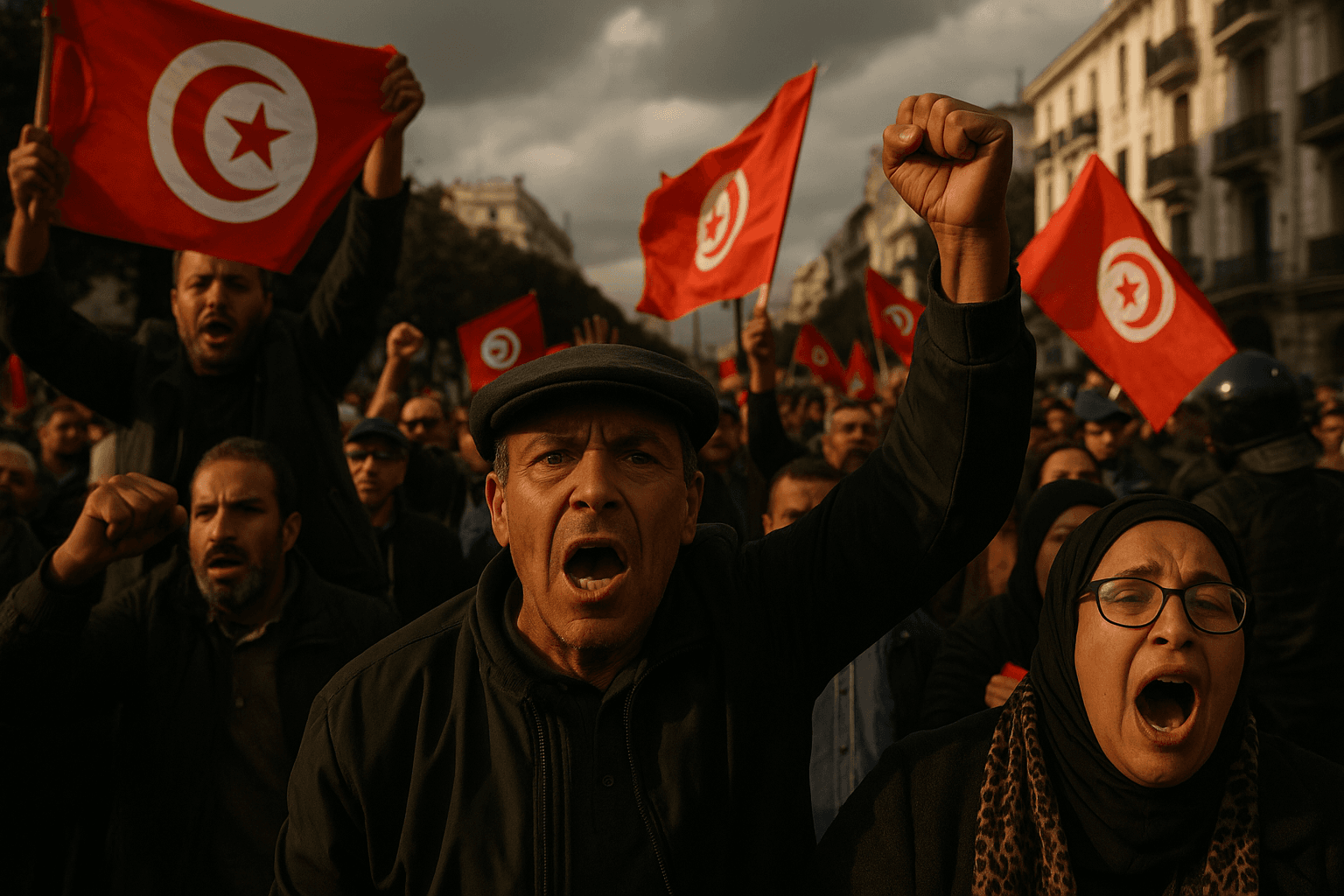
Tens of thousands of Tunisians took to the streets on December 6 in a third consecutive week of protests against President Kais Saied, underscoring deepening public anger over his widening campaign against opposition figures, critics and nongovernmental organizations. Rallies in central Tunis and provincial cities focused on the immediate demand for the release of jailed opposition leaders and on outrage over heavy sentences recently upheld by an appeals court in a conspiracy case.
The demonstrations come amid growing concern that Tunisia is sliding from a post revolution experiment in parliamentary democracy toward concentrated executive authority. Saied has defended his actions as necessary measures to tackle corruption and restore stability after he suspended and then dissolved parliament in 2021. Critics say the moves amount to a one person style of rule that has curtailed civic space and independent oversight.
Reuters reporting described broad public anger and noted that Tunisia’s largest trade union, the General Union of Tunisian Workers or UGTT, has responded by calling a national strike for January 21, 2026. The UGTT is a central political and social actor in Tunisia, and its decision raises the prospect of a prolonged cycle of labor unrest and street mobilization that could materially affect public services and economic activity.
Economic consequences are already apparent. Tunisia entered the crisis with structural weaknesses that include high unemployment especially among young people, persistent fiscal deficits and pressure on foreign exchange reserves. Political instability threatens tourism receipts, foreign direct investment, and the willingness of international lenders to engage. Investors have signaled concern about the trajectory of governance and the durability of any fiscal consolidation plan, which in turn could raise borrowing costs for the state.
Policy makers face a narrow set of options. Reversing recent prosecutions and reassuring rights institutions would help restore some political confidence, but Saied’s security and judicial measures remain popular with segments of the population that blame predecessor governments for chronic corruption and economic mismanagement. International partners that are weighing financial assistance will likely condition support on tangible commitments to judicial independence, transparency and a credible economic reform program.
Longer term the protests underscore a recurring Tunisian dilemma: how to translate the gains of the 2011 uprising into sustainable institutions that can deliver jobs and stable public finances. If the present cycle of repression and resistance continues it risks eroding Tunisia’s democratic gains while prolonging economic stagnation, with consequences for migration flows and regional stability. The calendar now points to a decisive moment in mid January, when the UGTT strike could either force a political reset or entrench polarization and deepen economic pain for ordinary Tunisians.